Context
When sensor readings drift or equipment fails, teams need to connect symptoms, history and operating conditions to investigate possible causes.
Detect, diagnose, predict
Anomaly detection flags unusual behaviour. Diagnosis investigates the observed fault. Prognostics considers its future evolution. Predictive maintenance may combine these functions, but an exceeded threshold does not establish that a failure will occur on a particular date. Separating the functions helps define a measurable initial product scope.
Design scenario: investigating drift in a robotic arm
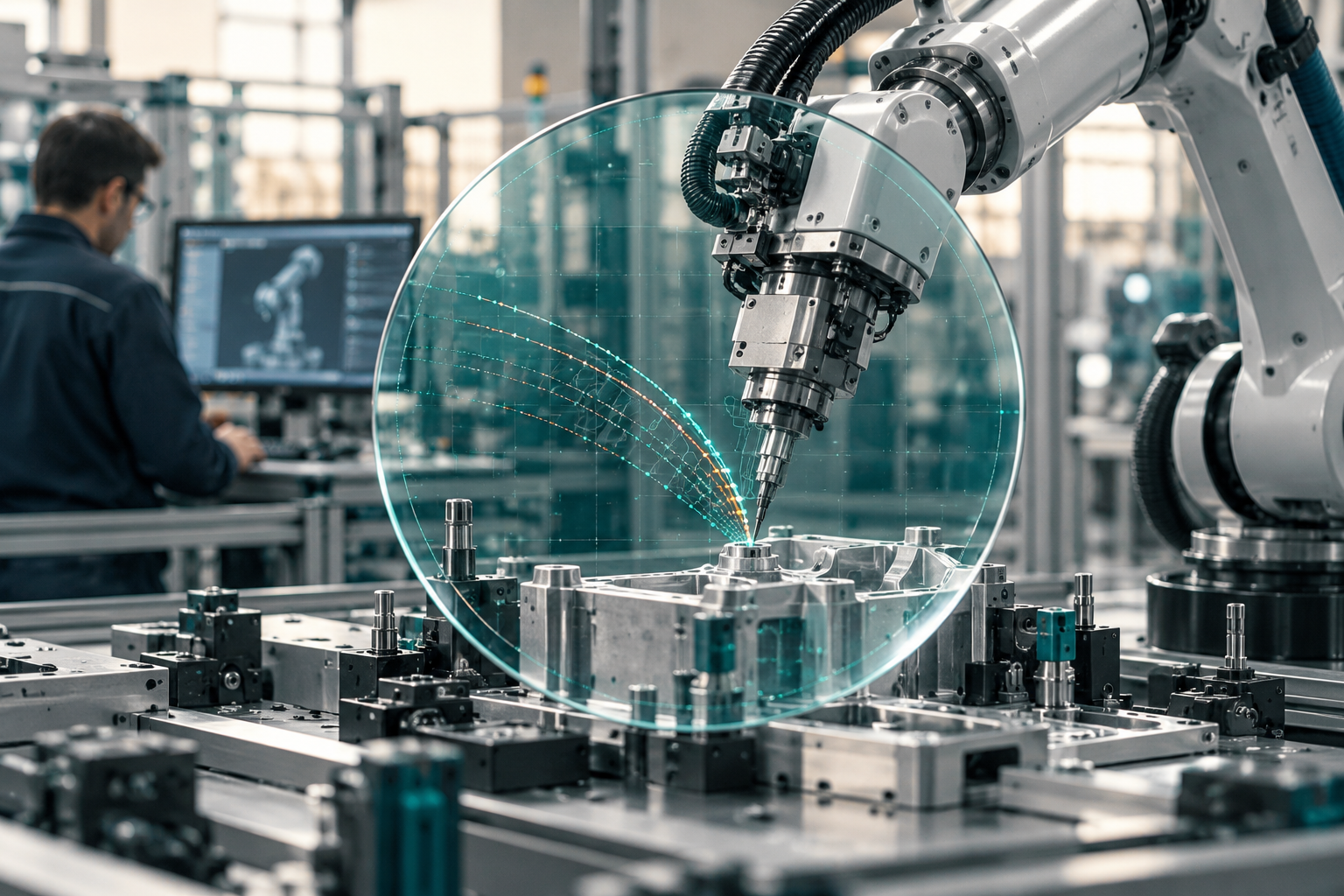
Fictional production-cell example: a robotic arm shows positioning drift during repeated cycles. A future tool could align controller logs, position measurements, load and service history. It would distinguish variations associated with the programme or operating regime from possible faults requiring investigation. The output would be a sourced record for the technician; no certain cause or automatic intervention is implied.
Cycles and operating context
Compare observations and history
Inspect and validate the cause
Conceptual workflow: it illustrates the scenario, not an existing tool.
Create a traceable investigation record
A useful interface could show the time window, available sensors, comparable operating conditions and missing information. It should distinguish absent measurements from healthy operation. A change in operating regime may invalidate a comparison; the product should disclose that rather than display a universal score.
Define a pilot and evaluation criteria
Starting with one equipment family and documented fault types would make the scope testable. Teams could examine irrelevant alerts, missed faults, verification time and traceability. No results against these criteria have been measured on this site. The domain supplies neither industrial datasets nor a trained model.
Frequently asked questions
Are sensors required? The concept assumes suitable data, already available or yet to be collected. Is an alert a diagnosis? No: it needs explanation and verification. Does this site connect to machines? No: this page describes a development scenario.
A sector reference
Checked on 30 October 2026: NIST’s manufacturing monitoring, diagnostics and prognostics programme specifically addresses robotic arms and machine tools, including measurement and validation work. Our robotic drift example is a design illustration consistent with that scope, not a customer case or published trial result.
Where could aidiagnostic.ai fit?
aidiagnostic.ai could give a machine diagnostics platform a common identity, with modules for equipment or fault types. An industrial developer could frame a software range beyond one machine or manufacturer while keeping an explicit industrial descriptor. It could serve as the primary product domain for international expansion; no uptime, conversion or search ranking gain follows automatically.
Before building a future product
Plan for reliable sensor data, documented faults, validation on each equipment type and integration with maintenance procedures. The name itself guarantees no uptime improvement.